Back pain after lifting, sitting or an injury does not automatically require a spine specialist, but leg pain, numbness or weakness changes the decision. You will be able to separate emergency symptoms from problems suitable for home care, identify when persistent nerve pain needs specialist review, and prepare for a useful consultation.
Key takeaways
- Seek emergency care for bladder, bowel, saddle numbness or worsening leg weakness.
- Nerve pain travels into the leg; muscle pain stays closer to the back.
- Arrange a specialist review when nerve pain persists or limits daily activity.
- Choose treatment from examination findings and symptoms, not an MRI report alone.
Seek emergency care for bladder, bowel or rapidly worsening symptoms
Do not wait for a routine appointment if a slipped disc is followed by new bladder or bowel changes, numbness in the saddle area, or worsening leg weakness. These signs can indicate cauda equina syndrome, nerve compression at the bottom of the spine, or another serious spinal problem.
| Symptom | What it may indicate | What to do |
|---|---|---|
| New difficulty passing urine | Significant nerve compression affecting bladder function | Seek immediate medical assessment |
| Loss of bladder or bowel control | Possible cauda equina syndrome | Go to emergency care now |
| Numbness around the genitals, anus, groin or inner thighs | Saddle numbness from compressed spinal nerves | Do not wait for an outpatient slot |
| Severe weakness in both legs or rapidly worsening weakness | Progressive neurological impairment | Seek emergency assessment immediately |
| Foot drop or inability to walk safely | Loss of motor function and fall risk | Get urgent medical help; do not drive yourself |
Do not use a local search for “spine doctor near me” as a substitute for emergency triage. Do not wait for the next available clinic appointment, even in Pimpri Chinchwad. Ask someone to take you to an emergency department or call local emergency services, particularly if you cannot walk safely.
Severe symptoms without bladder or bowel changes still need prompt assessment. Rapidly worsening weakness, new foot drop or loss of function should not be managed with home exercises or increasing painkillers.
Identify whether the pain is coming from a nerve, muscle or the back itself
Pain that travels down one leg with sensory or strength changes points more strongly to nerve-root irritation than to ordinary back or muscle pain.
A slip disc is a herniated or prolapsed intervertebral disc; when it presses on a nerve, pain often runs from the lower back through the buttock and down one leg as sciatica.
Look for this pattern:
- Burning, electric or shooting pain
- Tingling, numbness or altered sensation in the leg or foot
- Weakness, such as difficulty lifting the foot or standing on your toes
Local back pain usually stays near the spine. Muscle pain tends to worsen when you move, stretch or press the affected area, without a clear sensory change. These clues help, but they do not establish the diagnosis alone.
Hip disease can cause buttock or thigh pain, while a peripheral nerve disorder can produce numbness away from the spine. Fracture, infection and other spinal conditions can also mimic a disc problem, particularly after injury or with fever or unexplained illness.
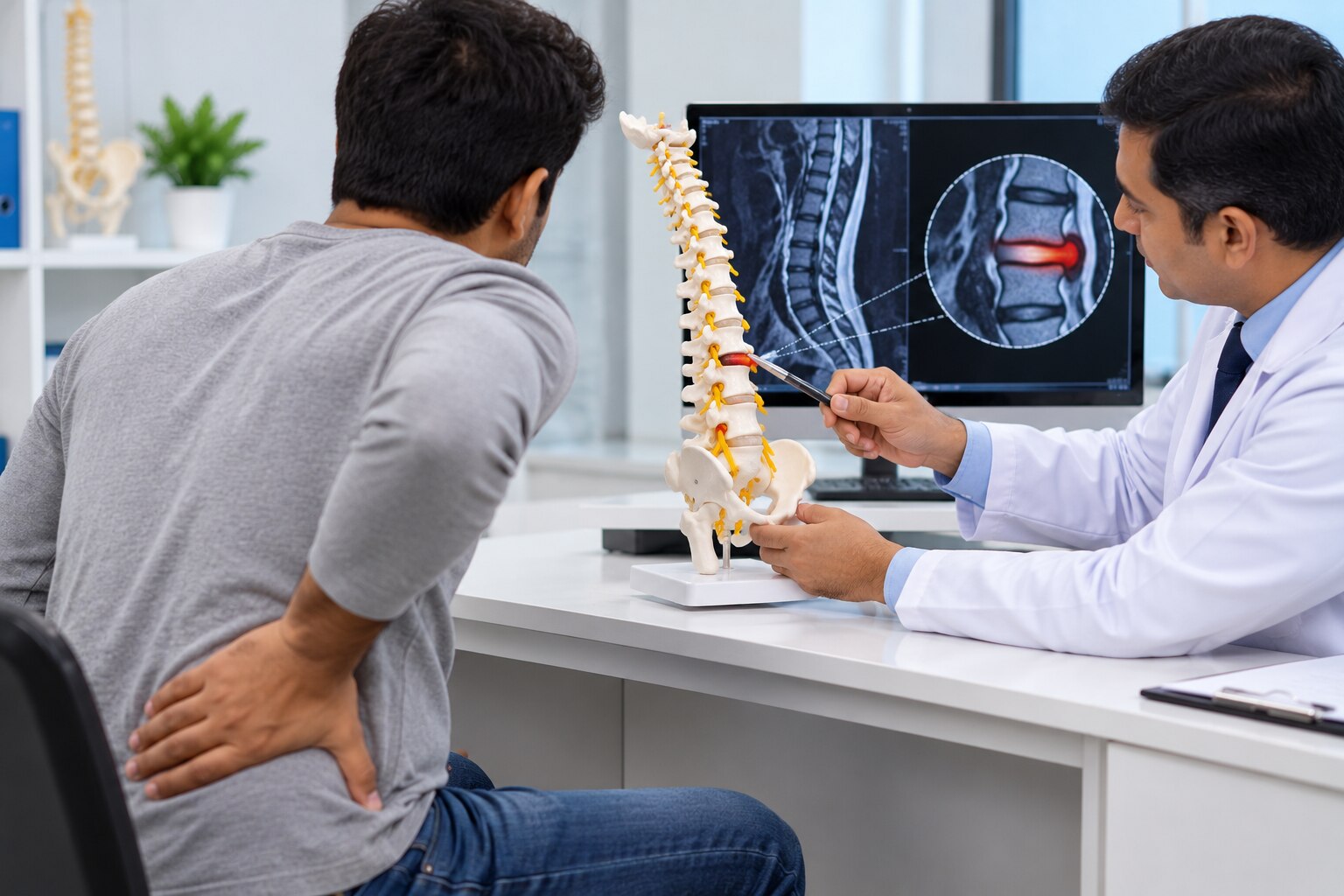
An MRI disc bulge does not prove that it caused your symptoms; bulges are common without pain. The examination and symptom pattern must match the scan. For persistent nerve pain after a suspected slip disc, a clinician should check strength, sensation, reflexes, walking and, when appropriate, the straight-leg-raise test.
Know when persistent nerve pain needs a non-emergency specialist review
Arrange a spine review if leg pain from a suspected slip disc is not clearly improving after several weeks. Do so sooner if it repeatedly returns, stays severe despite appropriate treatment, or prevents sleep, work, walking or ordinary daily tasks.
Progressive weakness, recurrent numbness, foot drop or any loss of function warrants prompt specialist review even without bladder or bowel symptoms.
- Continue gentle activity as tolerated rather than staying in bed; uncomplicated sciatica often improves over several weeks, and prolonged bed rest can delay recovery.
- Do not increase ibuprofen, diclofenac, naproxen or other painkiller doses without medical advice. The risks change with ulcer history, kidney disease, heart disease, pregnancy, anticoagulants and other medicines.
- Ask a general physician to begin assessment if specialist access is not immediate. Persistent nerve pain from a slip disc, repeated neurological symptoms or severe pain despite treatment justifies a spine consultation.
- Seek advice before choosing an injection or surgery; those decisions require examination and a review of what treatment you have already tried.
A general physician can assess strength, sensation and medication safety, but a spine specialist can match the symptoms to the likely nerve problem and discuss physiotherapy, medication changes, injections or surgery.
If you are deciding when to see a spine specialist for a slip disc in Pimpri Chinchwad, use function and symptom progression—not pain duration alone—as your threshold.
Understand what happens at the consultation and when imaging helps
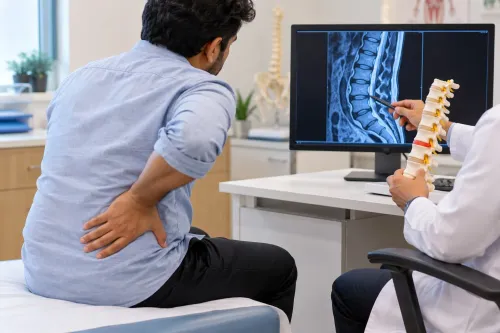
Expect a spine treatment consultation in Pimpri Chinchwad to begin with a detailed symptom history: onset, pain distribution, leg or arm symptoms, walking tolerance, sleep disruption, weakness, numbness, injury details and red-flag symptoms. The clinician will also review medicines, treatments tried, medical conditions and previous operations.
The examination should include strength, sensation, reflexes and gait. A straight-leg-raise test may be appropriate for suspected lower-back nerve irritation.
X-ray and MRI answer different questions:
| Test | Shows | Main limitation |
|---|---|---|
| X-ray | Bones, alignment, fractures and some degenerative changes | Does not show the disc or nerve clearly |
| MRI | Discs, nerves, spinal canal and other soft tissues | Findings must match your symptoms and examination |
MRI is useful when serious disease or neurological deficit is suspected, symptoms persist despite non-operative care, or the result could change treatment. It is not automatically required for every new episode of back pain.
Bring:
- Prior reports and image discs or online scans
- A current medicine list
- Treatments already tried
- Medical conditions and previous operations
- A timeline showing symptom changes
Anand Orthopaedic Hospital can help coordinate this assessment, provided you confirm the clinician’s spine qualifications and access to both non-surgical and surgical evaluation.
Related products
Spine problem & slip disc treatment. Spine problem & slip disc treatment. Dr Niranjan Ganjewar is well qualified to offer surgical treatment for the whole spine extending from the neck to the lower lumbar spine which... View product → |
Neck pain,backache treatment. Eight out of 10 people will suffer from back or neck pain at some point in their life. View product → |
Use examination findings—not an MRI report alone—to choose treatment
An MRI herniation does not decide treatment by itself. A specialist matches the scan with your pain pattern, strength, sensation, reflexes, gait and functional limits.
| Option | What it means | When it applies |
|---|---|---|
| Activity modification and physiotherapy | Reduce aggravating loads while restoring movement and strength | Symptoms without progressive neurological loss |
| Medication review | Choose safer pain relief around ulcers, kidney disease, heart disease, pregnancy, anticoagulants and other medicines | When current treatment is ineffective or risky |
| Epidural injection | A targeted option that may reduce nerve-root inflammation | Selected acute, severe sciatica after discussing alternatives |
An epidural does not remove the herniated disc or cure general back pain. Ask how long relief is expected, what risks apply, and what happens if it fails.
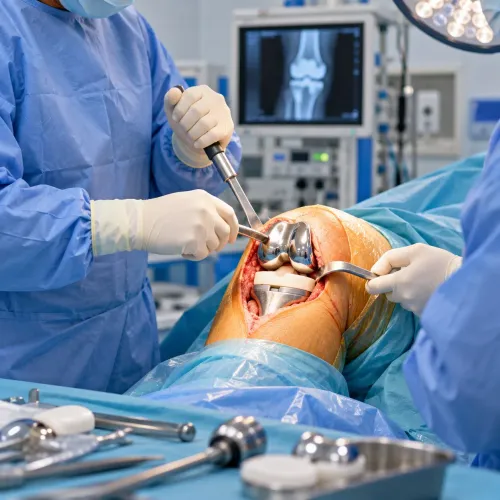
Surgery is not automatic after an MRI. It is considered when disabling leg symptoms persist despite appropriate non-surgical care, a significant neurological deficit worsens, or emergency compression is present. The decision weighs symptom duration, walking and work limitations, examination findings, imaging correlation and surgical risks.
Before choosing a slip disc specialist pc mc, check that the clinician offers:
- Relevant spine-care qualifications
- A documented neurological examination
- A willingness to discuss non-operative care
- A clear explanation of why the imaging matches your symptoms
A good review may lead to continued conservative care, an injection, or decompression surgery—but the examination must justify the choice.
Frequently asked questions
When should a slipped disc require emergency care?
Go to emergency care for new bladder or bowel changes, numbness in the saddle area, or rapidly worsening leg weakness. These symptoms can indicate cauda equina syndrome or serious nerve compression.
How can you tell whether slip disc pain comes from a nerve or muscle?
Nerve pain often travels from the back into the buttock or leg and may include tingling, numbness or weakness. Muscle pain usually remains closer to the back and changes with movement or pressure.
When does persistent nerve pain from a slip disc need a specialist review?
Arrange a non-emergency spine specialist consultation when leg pain, numbness or weakness persists, interferes with walking or sleep, or does not improve with the advised initial treatment.
What happens during a slip disc consultation, and when does MRI help?
The specialist reviews your symptoms and checks walking, reflexes, sensation, strength and nerve tension. MRI helps when symptoms persist, neurological findings are present, or the result will change treatment; an MRI report alone does not choose the treatment.
Keywords