The correct operation depends on which joint is producing your pain and limiting your movement, not simply on an X-ray showing arthritis. By comparing symptoms, examination findings, imaging, non-surgical treatment and surgical risks, you can prepare for a more focused discussion about knee surgery or hip surgery.
Key takeaways
- Hip arthritis can cause thigh or knee pain, so locate the source before choosing surgery.
- X-rays, movement tests and symptom patterns help distinguish hip, knee and spine problems.
- Try targeted non-surgical treatment before replacement when pain still allows daily activities.
- Ask your replacement surgeon about implant choice, recovery milestones and risks specific to you.
Start by locating the pain, not the replacement
Pain in the knee does not always come from the knee. Hip arthritis can refer pain to the thigh or knee, while a pinched nerve in the lower back can imitate either joint problem. The pain’s location, movement triggers and effect on daily tasks help identify the source.
- Knee symptoms usually centre around the kneecap or joint line, with swelling, catching, bowing, pain on stairs, or difficulty rising from a chair.
- Hip symptoms usually appear in the groin, buttock, outer hip or thigh, with pain when walking, putting on socks, entering a car or rotating the leg.
A simple clue is joint movement: if rotating the hip reproduces groin pain, the hip deserves close assessment; if bending or straightening the knee produces the familiar pain, the knee becomes more likely. Neither clue proves the diagnosis. Lower-back pain, tendon disorders and pain from another joint can overlap.
An orthopaedic assessment combines your history, walking pattern and physical examination with appropriate standing or weight-bearing X-rays. An X-ray showing arthritis does not prove that arthritis causes your symptoms, especially when the image looks severe but your pain is mild.
Choose between knee replacement versus hip replacement only after identifying the painful joint and confirming that symptoms limit activities despite suitable non-surgical care. That assessment determines whether knee surgery or hip surgery addresses your problem; the two operations are not interchangeable.
What each operation replaces and when it is considered
A knee replacement versus hip replacement decision starts with which joint is generating pain and lost function: the operations are not interchangeable. Replacement is considered when pain, stiffness, deformity or walking limitation disrupts daily life despite appropriate non-surgical treatment, not merely because an X-ray shows arthritis.
| Option | What it replaces | When it is considered |
|---|---|---|
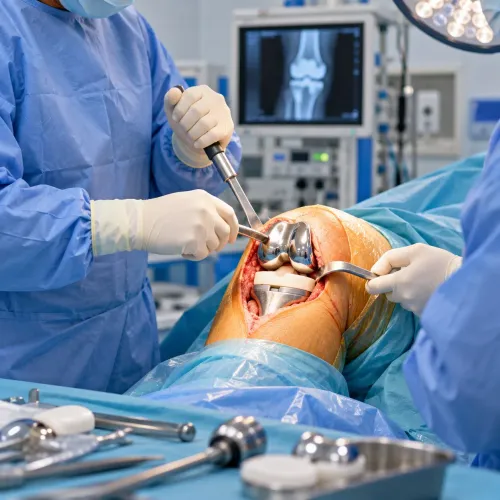
| Total knee replacement | Damaged surfaces of the thighbone and shinbone, with a plastic spacer between them | Arthritis or inflammatory disease affects several knee compartments and limits walking, standing or sleep |
| Partial knee replacement | Only the damaged knee compartment; healthy bone, cartilage and ligaments remain | Arthritis is confined to one compartment, with suitable alignment and stable ligaments |
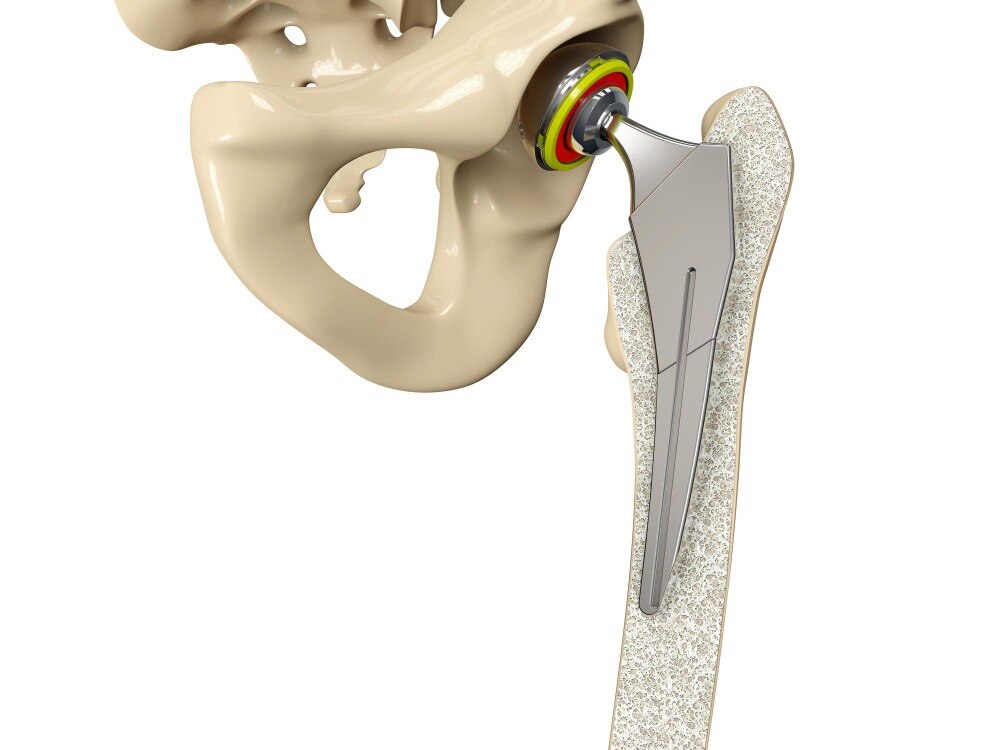
| Hip replacement | The damaged femoral head and socket, using prosthetic components | Severe hip arthritis, avascular necrosis, fracture or other joint damage causes persistent pain and disability |
Total knee replacement suits widespread knee damage, including osteoarthritis or rheumatoid arthritis. Partial replacement preserves more of your natural knee, but damage in another compartment, major deformity or ligament instability can make it unsuitable.
Hip replacement addresses pain usually felt in the groin, thigh or buttock when the hip joint is the source. A hip fracture or avascular necrosis can justify surgery even when the pattern differs from ordinary arthritis. The decision depends on symptoms, examination and imaging together.
How examination and imaging confirm the painful joint
An X-ray showing arthritis does not prove that the damaged joint causes your pain. Examination links symptoms to movement: the clinician checks hip rotation, knee alignment, swelling, tenderness, range of motion, strength, walking pattern and pain on stairs or standing.
| Test | What it shows | Why it matters |
|---|---|---|
| Weight-bearing knee X-rays | Joint-space loss, bone spurs, deformity and bone-on-bone change | Shows how the knee behaves under load |
| Pelvis and hip X-rays | Narrowed hip joint space, deformity, fracture or bone collapse | Identifies structural hip damage |
| MRI | Cartilage, meniscus, ligaments, bone marrow and soft tissues | Helps when X-rays are normal or symptoms do not match them |
| CT scan | Detailed bone shape and fracture patterns | Supports complex surgical planning |
| Diagnostic injection | Whether numbing medicine inside the suspected joint reduces pain | Connects that joint to the symptoms |
Hip arthritis commonly produces groin pain, but it can also cause thigh, buttock or knee pain. A knee MRI alone will miss a painful hip.
Blood tests such as complete blood count, C-reactive protein and erythrocyte sedimentation rate help investigate infection or inflammatory arthritis; they do not measure ordinary osteoarthritis. If the X-ray looks severe but your pain is mild, or the proposed operation is unclear, seek a second opinion or search for a joint replacement consultation near me.
What to try before replacement—and when it is no longer enough
Compare non-surgical care by the relief it provides, how long it lasts, and whether you can still meet daily goals. Before choosing knee surgery or hip surgery, confirm that the painful joint—not your spine, muscles or another joint—is limiting you.
| Treatment | What it may improve | Limitation to weigh |
|---|---|---|
| Exercise and physiotherapy | Strength, flexibility, balance and walking tolerance | Progress takes consistent practice; severe deformity or advanced damage may still limit gains |
| Weight reduction and activity changes | Joint load and flare-ups, especially during stairs or prolonged standing | It cannot restore worn cartilage or correct major deformity |
| Pain medicines or anti-inflammatory medicines | Short-term pain and inflammation | Side effects and medical conditions can restrict their use |
| Walking aids, brace or footwear changes | Stability and load distribution | They support movement but do not repair the joint |
| Corticosteroid injection | Temporary relief during a painful flare | Relief can wear off; repeated injections need careful medical planning |
Replacement becomes reasonable when pain disrupts sleep, walking, work or basic tasks despite a properly supervised trial of these options, and examination and radiographs match the symptoms. An X-ray showing arthritis alone does not make an operation necessary.
Ask what improvement each treatment is expected to deliver and when it has failed. If pain remains severe, walking distance keeps shrinking, or stiffness and deformity prevent ordinary activities, discuss the benefits, risks and recovery demands of replacement with an orthopaedic surgeon. A second opinion helps when symptoms and imaging do not match.
Making the decision with a replacement surgeon in Pimpri Chinchwad
Choose the operation that matches the joint limiting your life, not the worse-looking X-ray. Discuss walking distance, stairs, work, sleep, deformity and goals such as returning to cycling or managing a flight of stairs. Replacement becomes reasonable when pain and stiffness remain disabling despite suitable non-surgical care.
| Option | Symptoms and joint problem | Recovery and decision focus |
|---|---|---|
| Hip replacement | Groin or front-thigh pain, painful walking, shoe-wearing difficulty and hip stiffness from damaged cartilage | Functional improvement often feels quicker, but home support and safe walking still matter |
| Total knee replacement | Knee pain, swelling, deformity, loss of extension and difficulty standing or climbing stairs | Plan for swelling control, quadriceps strengthening and restoring full straightening |
| Partial knee replacement | Arthritis confined to one knee compartment with preserved ligaments and suitable alignment | Less extensive surgery is possible, but only when examination and imaging confirm the right pattern |
Before choosing knee replacement or hip replacement in Pimpri Chinchwad, ask a replacement surgeon in Pimpri Chinchwad to review diabetes control, weight, smoking, anaemia, heart or lung disease, active dental or other infection and current medicines. Treating these risks first can make surgery and rehabilitation safer.
Your decision also depends on whether you can attend physiotherapy, use walking aids and arrange help at home. Anand Orthopaedic Hospital can be one setting where you ask how the proposed operation fits those practical constraints.
A joint replacement consultation near me, or a second opinion, makes sense when symptoms do not match the radiograph, the pain source remains uncertain or the operation has not been explained clearly.
Related product
Knee & hip Replacement Dr, Niranjan Ganjewar is A Reliable and Best Joint Joint Replacement Surgeon in PCMC,Knee Replacement Surgeon in PCMC, Shoulder Surgery Surgeon in... View product → |
Frequently asked questions
How can you tell whether pain comes from the hip or knee?
Pain location alone is not enough. Hip arthritis can refer pain to the thigh or knee, while back nerve pressure can imitate joint pain. Your doctor compares pain triggers, hip and knee movement, walking pattern and examination findings.
When is knee or hip replacement considered?
Replacement is considered when confirmed joint damage causes persistent pain, stiffness or loss of function despite appropriate non-surgical treatment. The decision also depends on how much the condition limits walking, sleep, work and daily activities.
What tests confirm the painful joint before replacement?
An examination checks joint movement, tenderness, strength, gait and nerve function. Standing X-rays commonly show joint-space loss, bone changes and alignment. Your doctor orders further imaging when the symptoms and X-ray findings do not match.
What should you ask a replacement surgeon in Pimpri Chinchwad?
Ask which joint is causing the symptoms, what non-surgical options remain, why replacement is recommended, which implant and surgical approach are suitable, expected recovery milestones, possible complications and when you can resume specific activities.
Keywords