A broken bone is not automatically a specialist case, but an open wound, loss of sensation, poor circulation, severe deformity or suspected joint damage can make waiting for a routine appointment unsafe. By the end, you will know which injuries need emergency treatment, what to do before reaching care, and how to compare a general service with specialist fracture and trauma support.
Key takeaways
- Seek emergency care for an open fracture, absent pulse, numbness, deformity, or a cold limb.
- Immobilise the injured area and remove rings before swelling increases.
- Complex fractures need specialist assessment when alignment, nerves, joints, or skin are at risk.
- Compare imaging, surgical access, rehabilitation, and emergency response before choosing care.
Which fracture symptoms mean you need emergency care now?
Do not wait for a routine orthopaedic appointment if the injury involves uncontrolled bleeding, an open wound or visible bone, major deformity, an absent pulse, new numbness or weakness, blue or pale fingers or toes, a cold limb, rapidly increasing swelling or pain, or inability to move the limb.
Breathing difficulty or suspected head, neck or spinal injury also requires emergency help and careful transport.
| Finding | Decision |
|---|---|
| Closed injury with normal colour, warmth, sensation and pulse | Prompt emergency or orthopaedic assessment; routine review is suitable only after triage |
| Open fracture, deformity or changing circulation | Immediate emergency assessment and specialist fracture accident care in Pimpri Chinchwad |
| Breathing, head, neck or spinal warning signs | Call emergency services; treat it as a trauma emergency |
An open fracture needs urgent specialist assessment. Cover it with a sterile dressing, handle the limb carefully and arrange intravenous antibiotics as soon as possible, ideally within one hour. Do not repeatedly wash the wound, probe it or push visible bone back inside.
Pain out of proportion to the injury, pain when the fingers or toes are gently stretched, and tense swelling suggest acute compartment syndrome. Numbness, weakness or worsening tightness strengthens the warning, but a normal pulse does not rule it out. Delayed treatment can permanently damage muscle and nerves.
Serious fracture treatment PCMC requires urgent escalation when these signs appear, even if a cast or splint has already been applied. A stable, closed fracture with intact circulation and sensation can wait for organised orthopaedic review only after emergency danger signs have been excluded.
What should you do before reaching a fracture service?
Keep the injured area still in the position you found it while waiting for transport or emergency help. Unnecessary movement can turn a closed injury into an open one or worsen nerve and blood-vessel damage.
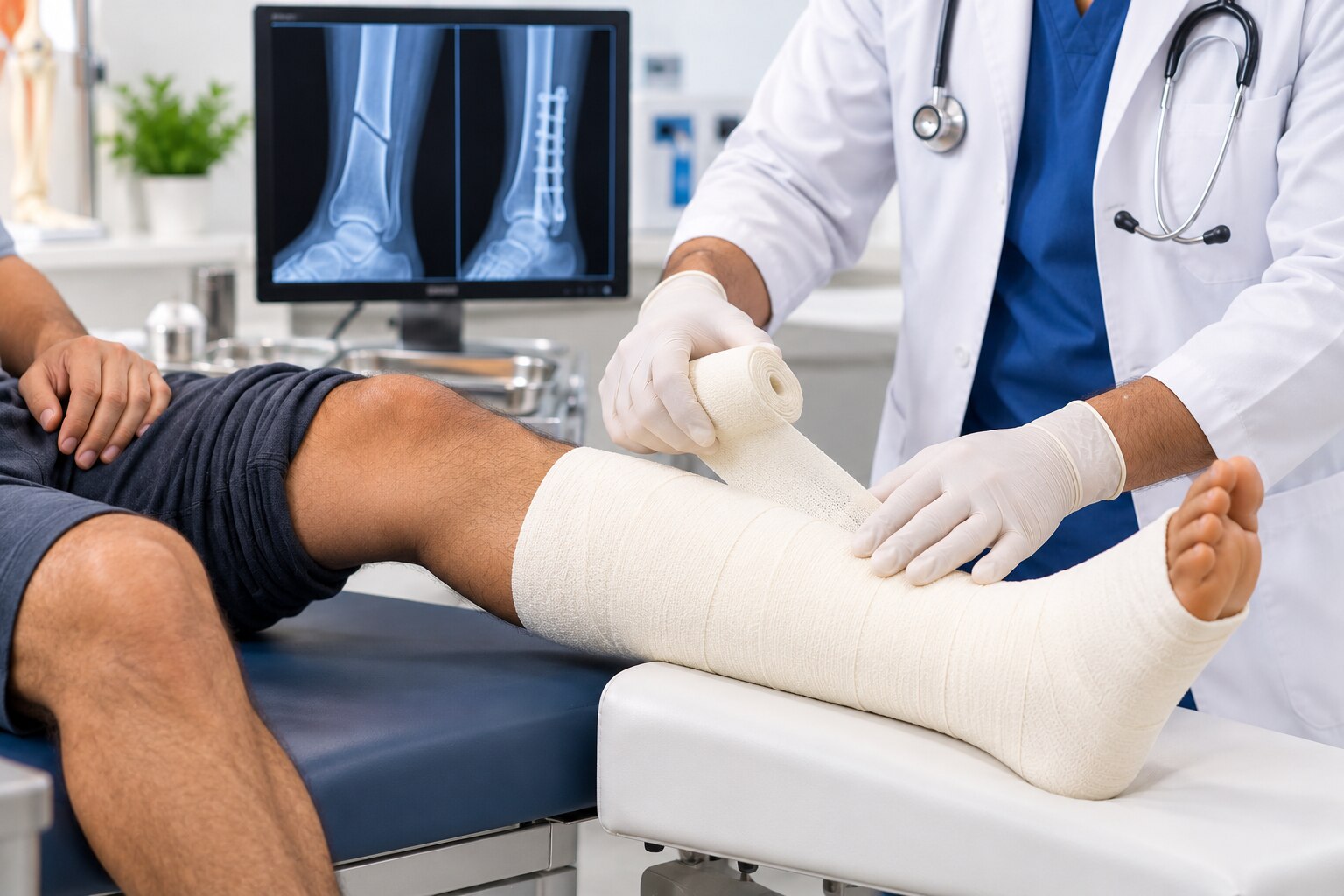
1. Support the limb with a splint, folded cardboard, clothing or firm padding. Place it alongside the injury without forcing the limb straight, and secure it above and below the suspected fracture. Never push a visible bone back under the skin.
2. Remove rings, watches, bracelets and tight footwear before swelling increases. Do not pull off anything stuck to an open wound.
3. Cover an open wound with a clean dressing or cloth. Do not probe it, scrub it or repeatedly wash it. Apply ice wrapped in cloth for short periods, such as 15 to 20 minutes, and never place ice directly on the skin.
4. Avoid food and drink if surgery or anaesthesia may be needed; an empty stomach reduces the risk of vomiting and inhaling stomach contents during anaesthesia. Follow different instructions from emergency clinicians.
5. Record the injury time, how the accident happened, current medicines including blood thinners, allergies and major medical conditions. Share these details when you call for help or search for accident injury orthopaedic care near me. Don't let the search delay emergency transport.
How can you tell a simple fracture from a complex one?
A closed, stable fracture remains aligned, with intact skin, circulation and nerve function. It may need a splint or cast, repeat X-rays and review—not automatically surgery. A complex fracture needs specialist decision-making because alignment, healing or limb function is at risk.
| Pattern | Why it matters |
|---|---|
| Stable and aligned | Routine immobilisation may be enough if follow-up images show no movement. |
| Displaced, angulated or rotated | The bone may heal short, crooked or twisted; reduction and closer monitoring may be needed. |
| Multiple fragments, joint-surface involvement or a fracture around an implant | CT planning can be important, and joint stiffness or implant failure becomes a concern. |
| Open wound, crush injury or bone loss | Contamination, damaged soft tissue and missing bone raise infection and healing risks. |
| Ligament damage, nerve or blood-vessel injury, or several injured body regions | The injury needs coordinated assessment beyond a routine cast. |
| Shifting inside a cast | Loss of alignment during healing requires prompt reassessment. |
Assessment starts with the skin, swelling, wounds and soft tissues, followed by documented circulation and nerve checks. X-rays in multiple views show alignment; CT clarifies joint involvement or several fragments. MRI can identify an occult fracture, spinal injury or soft-tissue damage when X-rays do not explain the symptoms.
A fracture specialist in Pimpri Chinchwad can build complex broken bone treatment around these findings, not the X-ray label alone. Specialist care does not automatically mean surgery: options include continued casting, reduction or closer imaging, with an operation considered when alignment cannot hold, the joint is involved, the wound is open or function is threatened.
When does specialist treatment offer more value than routine fracture care?
Specialist treatment offers more value when alignment, skin, joint function, circulation or healing is at risk. A stable closed fracture with intact sensation and circulation may need a splint or cast, repeat imaging and routine review.
| Option | What it provides | When it suits |
|---|---|---|
| Emergency department | Immediate assessment, X-rays, reduction and stabilisation | Severe pain, deformity, open injury, neurovascular change or multiple injuries |
| General orthopaedic clinic | Examination, casting and follow-up imaging | Stable, closed fractures without circulation or nerve problems |
| Fracture specialist | Focused fracture review, cast checks and alignment monitoring | Displacement, instability, shifting in a cast or uncertain healing |
| Orthopaedic trauma surgeon | Complex reduction, fixation and staged planning | Open, intra-articular, implant-related or neurovascular injuries |
| Hospital-based surgical service | Anaesthesia, fixation, infection care, medical support and transfer | Complex broken bone treatment, multiple trauma or unsafe outpatient care |
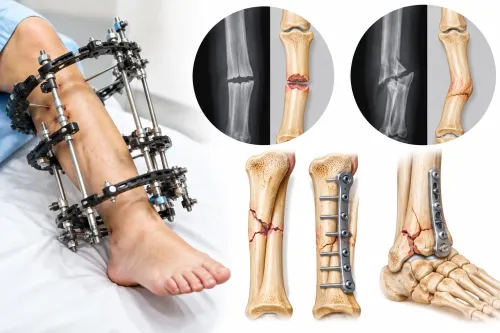
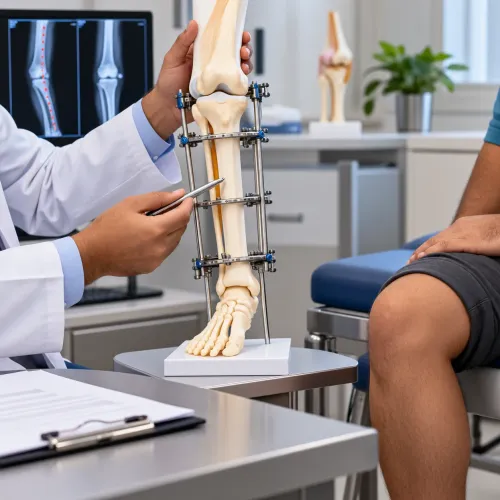
Treatment can range from closed reduction and casting to external fixation, plates and screws, or intramedullary nails. Surgery improves alignment when a fracture will not hold position, but brings infection, wound, implant, stiffness and anaesthetic risks.
Swelling, contamination or damaged skin can make immediate definitive fixation unsafe. Staged surgery may use temporary external fixation first, followed by plates, screws or a nail after tissues recover.
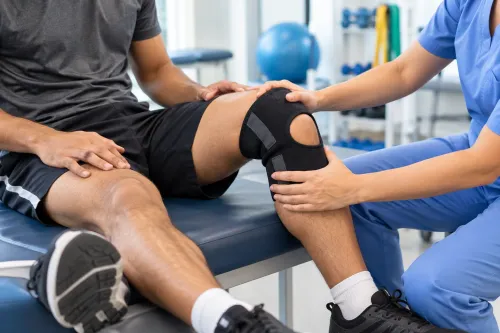
Seek specialist review for non-union, malunion, repeat injury or failure to maintain alignment. Follow-up imaging, cast checks, weight-bearing instructions and rehabilitation protect the result. Serious fracture treatment PCMC services should also address smoking, diabetes, poor circulation and other factors that slow healing.
How should you choose accident-fracture care in Pimpri-Chinchwad?
Choose a service by matching its capabilities to the injury, not by choosing the shortest journey. Searching for accident injury orthopaedic care near me is reasonable for a stable, closed fracture; added travel is worthwhile when there is displacement, an open wound, joint involvement, neurovascular change, multiple injuries or failed initial treatment.
| Option | What it can provide | When it fits |
|---|---|---|
| Emergency or general orthopaedic service | Initial assessment, X-ray, splinting and referral | Stable injury with intact circulation and sensation |
| Orthopaedic fracture service | Reduction, follow-up imaging, cast adjustment and rehabilitation planning | Displaced or unstable fracture needing close review |
| Higher-level trauma service | Anaesthesia, fixation, vascular or medical support, infection care and transfer coordination | Open, contaminated, multiple, vascular or medically complicated injury |
Before choosing a fracture specialist in Pimpri Chinchwad, ask:
- Can you provide same-day X-ray and CT when indicated?
- Will staff document circulation and nerve checks before and after treatment?
- Can you perform reduction, anaesthesia and fixation, and manage wounds and infection?
- Is vascular or medical support available, with transfer to a higher-level trauma service if needed?
- Is physiotherapy arranged, and when is the first review and repeat X-ray?
- How long will immobilisation last, when can movement or weight-bearing begin, and which symptoms require an urgent return?
Anand Orthopaedic Hospital is one option for Pimpri-Chinchwad residents who need orthopaedic assessment and a follow-up plan after an accident fracture. Specialist fracture accident care in Pimpri Chinchwad is not necessary for every stable fracture; it earns its extra coordination when the injury or recovery plan is difficult to manage safely.
Related product
Fracture & accident care Dr Niranjan Ganjewar is A Reliable and Best Joint Joint Replacement Surgeon in PCMC,Knee Replacement Surgeon in PCMC, Shoulder Surgery Surgeon in... View product → |
Frequently asked questions
Which fracture symptoms mean you need emergency care now?
Go to emergency care for uncontrolled bleeding, an open wound or visible bone, major deformity, absent pulse, new numbness or weakness, blue or pale fingers or toes, a cold limb, rapidly increasing swelling or pain, or inability to move the limb.
What should you do before reaching a fracture service?
Keep the limb still in the position found, support it with a splint or folded clothing, cover an open wound with a clean dressing, apply wrapped ice, remove rings or watches, and do not push visible bone back or eat if surgery may be needed.
How can you tell a simple fracture from a complex one?
A complex fracture involves an open wound, major displacement, multiple fragments, joint involvement, nerve or blood-vessel symptoms, severe swelling, or damage to the skin and surrounding tissue. An X-ray and clinical examination confirm the pattern.
When does specialist treatment offer more value than routine fracture care?
Specialist care offers more value when the fracture threatens circulation or nerves, crosses a joint, is unstable or badly displaced, involves multiple injuries, or needs reduction, fixation, wound management, and coordinated rehabilitation.
How should you choose accident-fracture care in Pimpri-Chinchwad?
Choose a service that can assess you urgently, provide appropriate X-rays, monitor circulation and nerve function, manage open injuries, arrange reduction or surgery when needed, and explain follow-up and rehabilitation.
Keywords