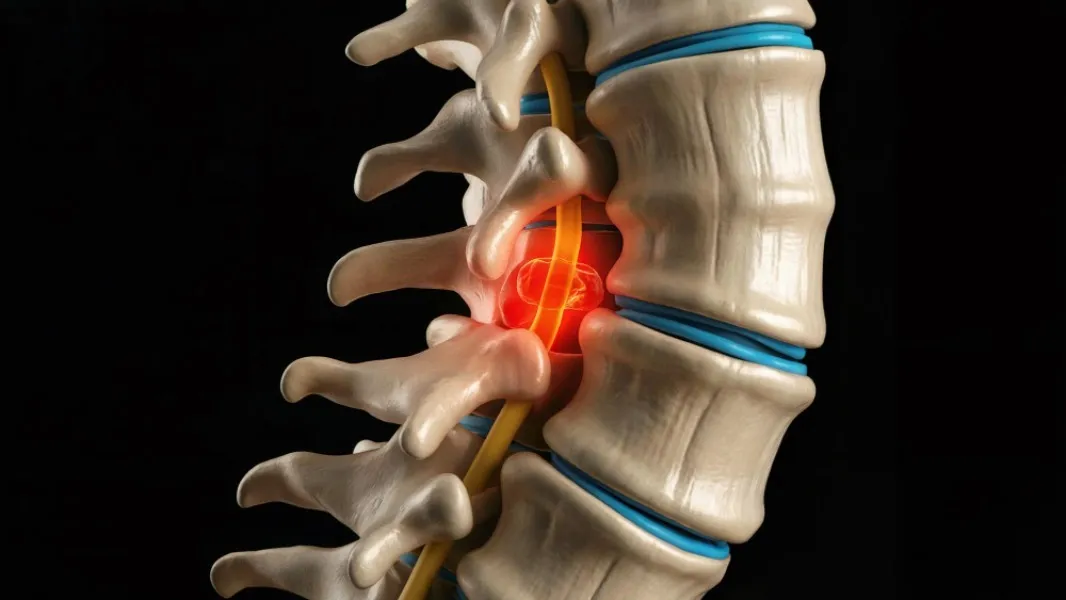
Being told that an MRI shows a slipped disc can cause considerable anxiety. Many patients immediately assume they will need spine surgery. In reality, disc abnormalities vary considerably, and imaging findings must be interpreted alongside symptoms and neurological examination. Choosing appropriate slip disc specialist treatment therefore begins with a careful clinical assessment.
For patients across Pimpri-Chinchwad, knowing what to look for in an orthopaedic or spine evaluation can help them make a more informed treatment decision.
Look for Symptom-Based Evaluation
A specialist should understand what the patient is actually experiencing before focusing on the scan.
Important details include:
- Location of back or neck pain
- Whether pain travels into an arm or leg
- Numbness or tingling
- Muscle weakness
- Duration of symptoms
- Activities that worsen pain
- Previous treatment
A disc bulge visible on imaging does not automatically prove that it is responsible for every symptom.
Expect a Neurological Examination
When a disc affects a nerve, the pattern of symptoms can provide important clues.
Assessment may include:
- Muscle strength
- Reflexes
- Sensation
- Walking
- Nerve tension tests
- Movement of the affected spinal region
The examination and imaging should generally make clinical sense together.
Ask Whether Conservative Care Is Appropriate
Many disc-related problems can initially be managed without surgery, depending on their severity.
Treatment may include:
- Medication prescribed according to clinical need
- Physiotherapy
- Activity modification
- Guided exercises
- Posture and ergonomic changes
- Progressive strengthening
The aim is to control symptoms while restoring safe movement and function.
Understand When Further Intervention Is Considered
Some patients may need more advanced treatment.
Factors influencing this decision can include:
- Persistent severe radiating pain
- Progressive neurological weakness
- Significant nerve compression
- Failure to improve with appropriate conservative care
- Functional deterioration
- Certain urgent neurological findings
Surgical decisions should therefore be based on a combination of symptoms, examination, imaging, and response to treatment.
Avoid Choosing Care Based Only on a Scan Report
MRI reports often contain terms such as disc bulge, protrusion, degeneration, or nerve compression. Reading these terms without clinical context can make an abnormality appear more alarming than it is.
A useful consultation should explain:
- Which spinal level is affected?
- Does it correspond with your symptoms?
- Is there neurological weakness?
- What treatment options are reasonable?
- What signs would change the treatment plan?
Patients should leave with a clearer understanding of the problem rather than simply a list of technical findings.
Rehabilitation Should Match the Condition
Random online exercises are not appropriate for every disc problem.
A rehabilitation programme may be adapted according to symptom behaviour, mobility, muscle strength, work requirements, and neurological findings.
As symptoms improve, treatment can gradually focus on restoring strength and helping the patient return to normal activities.
Know the Warning Signs
Prompt medical assessment is particularly important if spinal symptoms are accompanied by progressive limb weakness, major difficulty walking, or significant changes in bladder or bowel function.
These are not symptoms to manage through self-directed exercise alone.
Anand Orthopaedic Hospital provides assessment for patients in Pimpri-Chinchwad with back, neck, and disc-related symptoms. Evaluation can help establish whether a disc abnormality is clinically significant and whether non-surgical management or further intervention should be considered.
Choosing specialist care for a slipped disc is ultimately about finding a diagnosis-led approach. The most appropriate treatment is not necessarily the most aggressive one; it is the option that corresponds to the patient's neurological findings, structural problem, symptom severity, and functional needs.
Keywords