A fracture becomes complex when its location, fragmentation, soft-tissue damage, or effect on a joint makes straightforward treatment difficult. Complexity may also arise when several bones are injured, the fracture is open, or the patient has poor bone quality.
People researching complex fracture surgery in PCMC should understand that the objective is not simply to place metal implants. Treatment must restore useful alignment while protecting blood supply, skin, muscles, nerves, and joint function.
What Can Make a Fracture Complex?
Complex fracture patterns may include:
- Comminuted fractures with several fragments
- Fractures extending into a joint
- Open fractures with damaged skin
- Pelvic or acetabular fractures
- Fractures associated with dislocation
- Bone loss following severe trauma
- Fractures near an existing implant
- Multiple fractures in the same limb
- Injuries involving nerves or blood vessels
A fracture can also become difficult to manage when treatment is delayed or the surrounding tissues are severely swollen.
Planning Begins With More Than an X-Ray
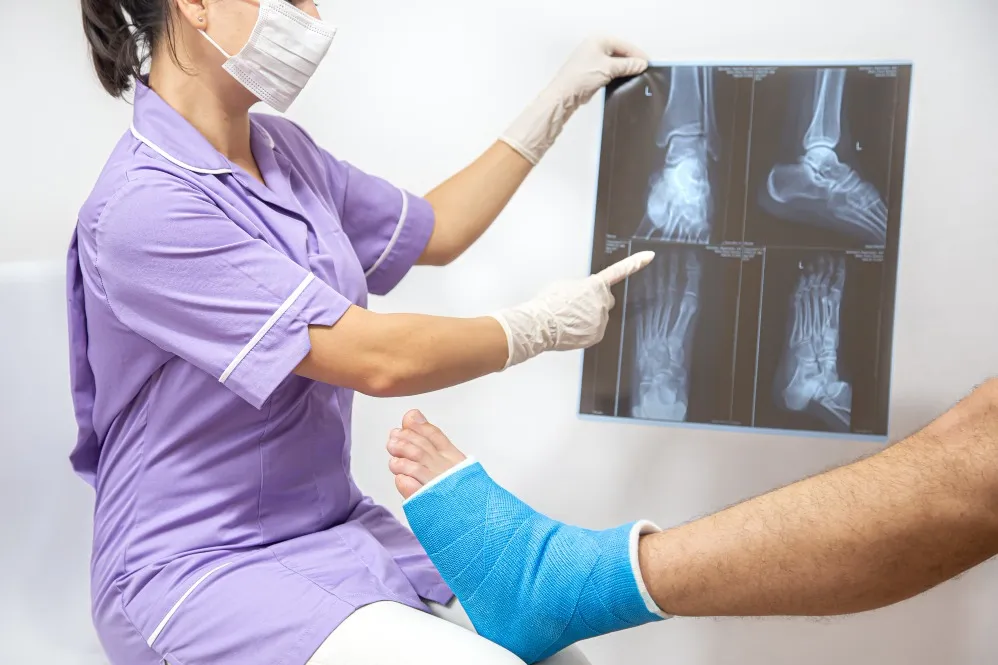
Standard X-rays show alignment and major fracture lines. CT scans may be used to study fragment position, particularly when a joint surface is involved. Three-dimensional reconstruction can sometimes help the surgical team understand complicated anatomy.
The condition of the skin and soft tissue is equally important. Operating through badly swollen or damaged tissue can increase wound-related risk. In certain cases, the fracture is temporarily stabilised while swelling settles and the patient’s overall condition improves.
One-Stage and Staged Treatment
Some fractures can be definitively fixed during one operation. Others benefit from staged management.
For example, an external fixator may first hold the bone in a safer position while wounds are cleaned, swelling reduces, or other injuries are treated. Internal fixation can then be performed when conditions are more suitable.
This approach is not necessarily a delay in care. It may be a deliberate strategy designed to protect damaged tissues.
How Is Fixation Selected?
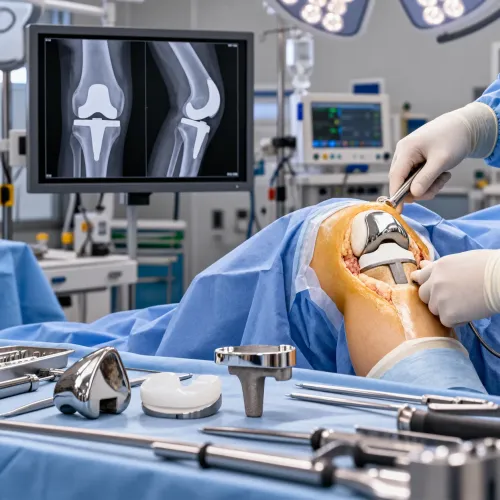
Plates, screws, intramedullary nails, wires, external fixators, or combinations of these may be considered. Implant selection depends on:
- The bone involved
- Fracture geometry
- Joint involvement
- Soft-tissue condition
- Bone quality
- Expected load on the limb
- Patient age and activity needs
- Presence of infection or contamination
The surgeon must balance mechanical stability with preservation of the bone’s biological capacity to heal.
Rehabilitation Must Match the Repair
After surgery, patients often want to know when they can walk, work, or drive again. There is no universal timeline. Weight-bearing may be permitted early in some injuries and restricted in others.
Rehabilitation can include swelling control, joint movement, muscle activation, gait training, and progressive strengthening. Instructions should be specific to the injury and fixation rather than copied from another patient’s experience.
Smoking, uncontrolled diabetes, poor nutrition, infection, and missed follow-ups can interfere with healing. Patients should also report wound discharge, fever, worsening pain, new numbness, or sudden loss of function.
For patients in Pimpri-Chinchwad and the Pune region, Anand Orthopaedic Hospital offers assessment and surgical management for orthopaedic trauma, including difficult fracture patterns. A careful plan may involve emergency stabilisation, definitive fixation, follow-up imaging, and supervised rehabilitation.
Complex fractures often require patience from both the patient and the care team. Clear explanations, realistic recovery milestones, and regular monitoring are essential parts of achieving the best function possible after a serious injury.
Keywords