ain after an accident is not always a reliable measure of injury severity. Some fractures cause immediate deformity and intense pain, while others initially appear to be a sprain or bruise. Adrenaline can temporarily reduce pain, and swelling may develop gradually over several hours.
An evaluation by an accident fracture specialist in Moshi can help determine whether a bone, joint, ligament, tendon, nerve, or surrounding tissue has been damaged.
Warning Signs of a Possible Fracture
A fracture should be considered when an injured person has:
- Localised pain that worsens with movement
- Rapid swelling or bruising
- Difficulty using the affected limb
- Inability to bear weight
- Visible deformity or shortening
- Tenderness directly over a bone
- A grinding sensation
- An open wound near the painful area
However, the absence of deformity does not rule out a fracture. Hairline fractures, impacted fractures, and fractures around the wrist, ankle, hip, or spine may be less obvious.
What Should Be Done Before Reaching the Hospital?
The injured area should be supported in the position found. A temporary padded splint may help limit movement when trained assistance is not immediately available, but it should not be tied so tightly that circulation is affected.
Remove rings, watches, or tight accessories from an injured hand or wrist before swelling increases. Avoid giving food or drink if significant trauma has occurred because anaesthesia or a procedure may become necessary.
If there is an open wound, cover it gently with clean material. Do not push exposed bone back beneath the skin. Heavy bleeding, loss of consciousness, breathing difficulty, or suspected head, neck, or spine injury requires emergency assistance.
Why Imaging Matters
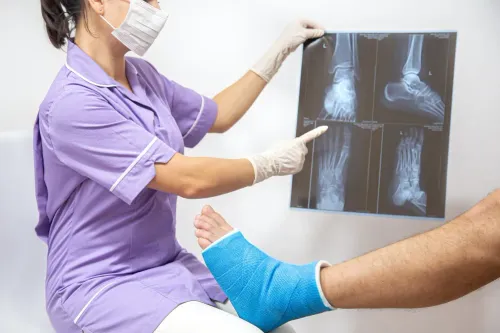
A clinical examination identifies the probable injury, but imaging confirms its location and pattern. X-rays are commonly used for fractures. CT scanning may provide more detail for complex joint fractures, pelvic injuries, or multiple bone fragments.
MRI may be considered when ligament, cartilage, spinal disc, bone marrow, or other soft-tissue damage is suspected. Not every patient requires every test; the investigation should match the clinical concern.
Treatment Is Based on Stability
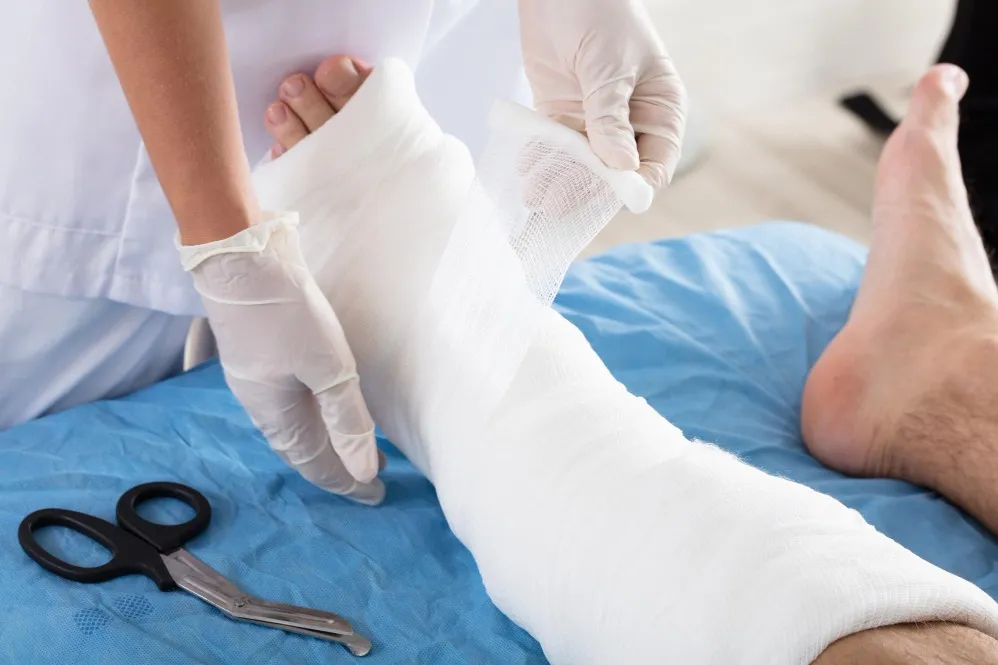
Stable, well-aligned fractures may be treated with a cast, brace, splint, or controlled mobilisation. Displaced or unstable injuries may require reduction, which means restoring the bone to a suitable position.
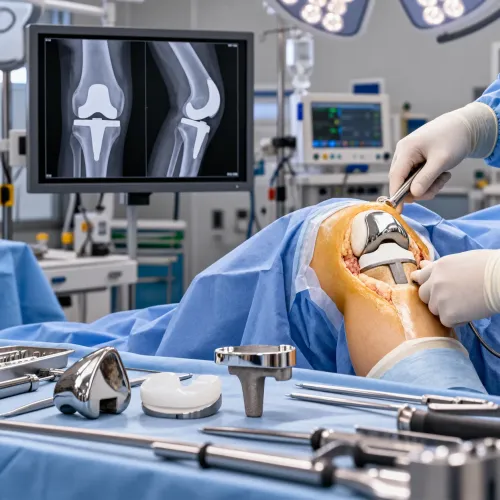
Surgery may be advised when acceptable alignment cannot be maintained, the fracture enters a joint, the injury is open, or surrounding structures are at risk.
The patient’s age, occupation, activity level, bone quality, medical conditions, and injury location all influence the decision. Two patients with similar-looking X-rays may therefore receive different treatment plans.
Do Not Ignore Follow-Up Care
A fracture that has been immobilised still needs monitoring. Swelling can make a cast feel tight, while reduction in swelling can later make it loose. Repeat X-rays may be required to confirm that the bone remains properly aligned.
Seek prompt advice if fingers or toes become numb, unusually cold, blue, increasingly swollen, or difficult to move. Increasing pain inside a cast should also be assessed.
Anand Orthopaedic Hospital provides accident and fracture evaluation for patients from Moshi and nearby parts of Pimpri-Chinchwad, Maharashtra. Timely assessment can clarify the injury, reduce avoidable movement at the fracture site, and help patients begin appropriate treatment without relying on guesswork or home remedies.
Keywords