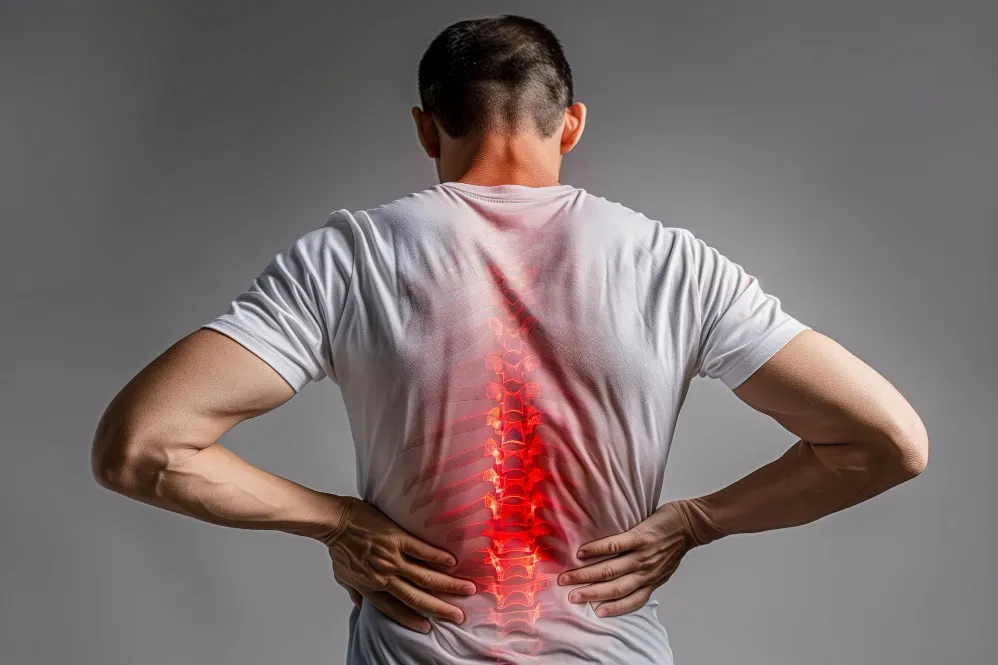
Lower back pain is extremely common, but that does not mean every episode should be treated in the same way. Some cases settle with appropriate activity and basic care, while others require detailed evaluation. Knowing when to seek lower back pain treatment can prevent both unnecessary worry and prolonged neglect.
For patients in Moshi, especially people involved in desk work, driving, lifting, industrial work, or physically demanding occupations, a simple symptom checklist can help determine when an orthopaedic assessment may be useful.
Check How Long the Pain Has Lasted
Short-term back discomfort after unusual physical activity may improve gradually.
Evaluation becomes more important when pain:
- Persists for several weeks
- Keeps returning
- Is progressively worsening
- Prevents normal work or sleep
- Requires frequent medication to remain manageable
Duration alone does not diagnose the problem, but persistent symptoms deserve attention.
Check Whether Pain Travels Into the Leg
Pain confined to the lower back may have different causes from pain radiating through the buttock and leg.
Radiating pain may be associated with irritation or compression of a spinal nerve. Patients may describe burning, electric-shock sensations, tingling, or numbness.
The distribution of these symptoms can help an orthopaedic specialist determine which structures may be involved.
Check for Weakness or Numbness
Neurological symptoms require particular attention.
Seek medical evaluation when back pain occurs with:
- Persistent numbness
- Leg weakness
- Foot weakness
- Increasing difficulty walking
- Significant changes in balance
Certain severe neurological symptoms involving bladder or bowel control or numbness around the groin require urgent medical assessment.
Review Your Daily Routine
Mechanical stress can contribute to recurring back symptoms.
Ask yourself:
- Do I sit continuously for long periods?
- Is my work physically demanding?
- Do I repeatedly bend and lift?
- Have I recently increased exercise intensity?
- Do I have weak trunk and hip muscles?
- Does prolonged driving worsen symptoms?
Identifying aggravating activities helps guide practical changes.
Understand That Imaging Is Not Always the First Step
Many patients assume that back pain automatically requires an MRI.
Imaging can be very useful when clinically indicated, particularly if there are neurological symptoms, significant trauma, persistent unexplained pain, or concern about structural pathology.
However, the decision should follow medical assessment rather than treating a scan as a substitute for examination.
What Does Treatment Usually Involve?
The approach depends on the diagnosis and severity.
Non-surgical care may include:
- Guided activity modification
- Appropriate medication
- Physiotherapy
- Core and hip strengthening
- Mobility work
- Ergonomic improvement
- Education about lifting and movement
Selected spinal conditions may require injections, further investigations, or surgical evaluation.
Most importantly, patients should avoid assuming that every back problem requires either complete bed rest or surgery. Both can be inappropriate when used without a diagnosis.
Keep Useful Information Before Your Appointment
A short symptom record can improve the consultation.
Note:
- When the pain began
- Where it is located
- Whether it travels into either leg
- Which movements worsen it
- Whether numbness is present
- What treatments you have already tried
- Whether there was a previous injury
Anand Orthopaedic Hospital in Moshi assesses lower back and spine-related complaints and determines treatment based on clinical findings and, where necessary, appropriate investigations.
Persistent back pain is best approached systematically. Duration, neurological symptoms, functional limitations, work demands, and physical examination together provide a clearer picture than pain severity alone. Early evaluation is especially important when symptoms are worsening or interfering substantially with mobility and daily life.
Keywords