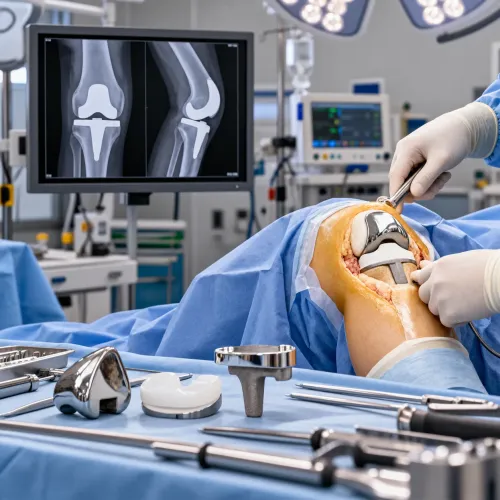
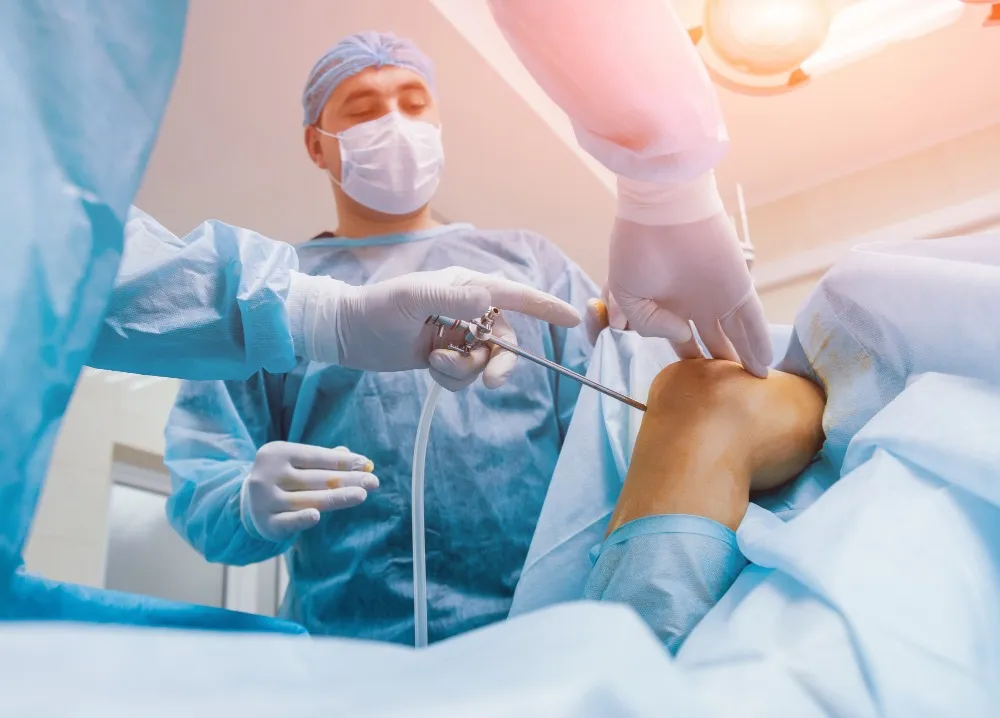
Joint surgery does not always require a large incision. For selected knee, shoulder, and other joint problems, arthroscopic joint surgery allows an orthopaedic surgeon to examine and treat structures inside a joint using a camera and specialised instruments introduced through small incisions.
Patients in Moshi considering arthroscopy often want to know what it can treat, how it differs from open surgery, and whether every joint problem can be managed this way.
What Is Arthroscopy?
An arthroscope is a narrow instrument equipped with a camera. It allows the surgeon to visualise structures within the joint on a monitor.
Additional small portals can be used to introduce instruments required for the planned procedure.
Arthroscopy can be used for diagnosis and treatment, although modern imaging often provides substantial diagnostic information before surgery.
Which Knee Problems May Be Treated Arthroscopically?
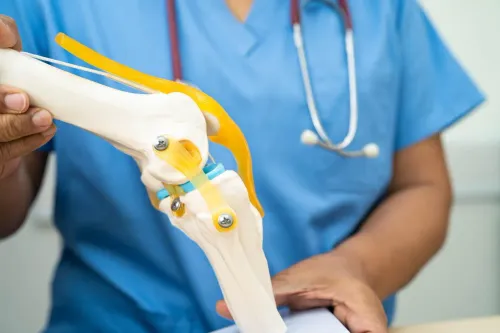
Depending on the diagnosis, knee arthroscopy may be considered for conditions involving structures such as:
- Meniscus
- Cruciate ligaments
- Loose bodies
- Selected cartilage lesions
- Certain joint-related injuries
For example, some meniscal tears may be repaired, while others may require a different approach depending on tear pattern, location, age of the tissue, and associated conditions.
What About Shoulder Arthroscopy?
Shoulder arthroscopy can be used in the management of selected problems involving:
- Rotator cuff
- Labrum
- Recurrent instability
- Impingement-related conditions
- Certain tendon or joint abnormalities
Again, the presence of shoulder pain alone does not mean arthroscopy is necessary.
Clinical examination, imaging, functional limitations, and response to conservative care influence the decision.
What Are the Practical Advantages?
Because arthroscopy uses smaller surgical openings than traditional open approaches for many procedures, it can reduce disruption of surrounding tissues in suitable cases.
Potential practical benefits can include:
- Smaller incisions
- Direct visualisation of internal joint structures
- Ability to perform precise procedures
- Structured postoperative rehabilitation
However, recovery depends much more on the actual procedure performed than the size of the skin incision.
A ligament reconstruction, for instance, requires substantial biological healing and rehabilitation even if it is performed arthroscopically.
Arthroscopy Is Not a Treatment for Every Joint Pain
This is an important distinction.
Joint pain can arise from arthritis, muscle weakness, tendon problems, referred pain, inflammatory disease, or other conditions.
Some problems are better managed through:
- Physiotherapy
- Activity modification
- Medication
- Strengthening
- Other non-operative measures
Advanced arthritis in particular may require a different treatment strategy from a focal sports-related joint injury.
What Should Patients Ask Before Surgery?
Useful questions include:
- What exact structure is damaged?
- What does the MRI or other imaging show?
- What will be done during arthroscopy?
- Are non-surgical options still reasonable?
- How long will rehabilitation take?
- When can work or sport resume?
- Will weight bearing or arm movement be restricted?
The answers vary considerably between procedures.
Rehabilitation Influences the Final Outcome
After arthroscopy, rehabilitation is planned according to what was repaired or reconstructed.
The programme may focus on:
- Controlling swelling
- Restoring movement
- Protecting repaired tissue
- Rebuilding muscle strength
- Improving balance and coordination
- Returning to work or sport
Following a generic exercise programme without considering the procedure can interfere with recovery.
Anand Orthopaedic Hospital in Moshi evaluates joint injuries and conditions where arthroscopic assessment or surgery may be considered. Treatment decisions are based on the specific diagnosis and functional needs of the patient.
Arthroscopy is best understood as a surgical technique rather than a universal solution for joint pain. Its value depends on selecting the right patient, identifying a treatable structural problem, performing the appropriate procedure, and following it with condition-specific rehabilitation.
Keywords