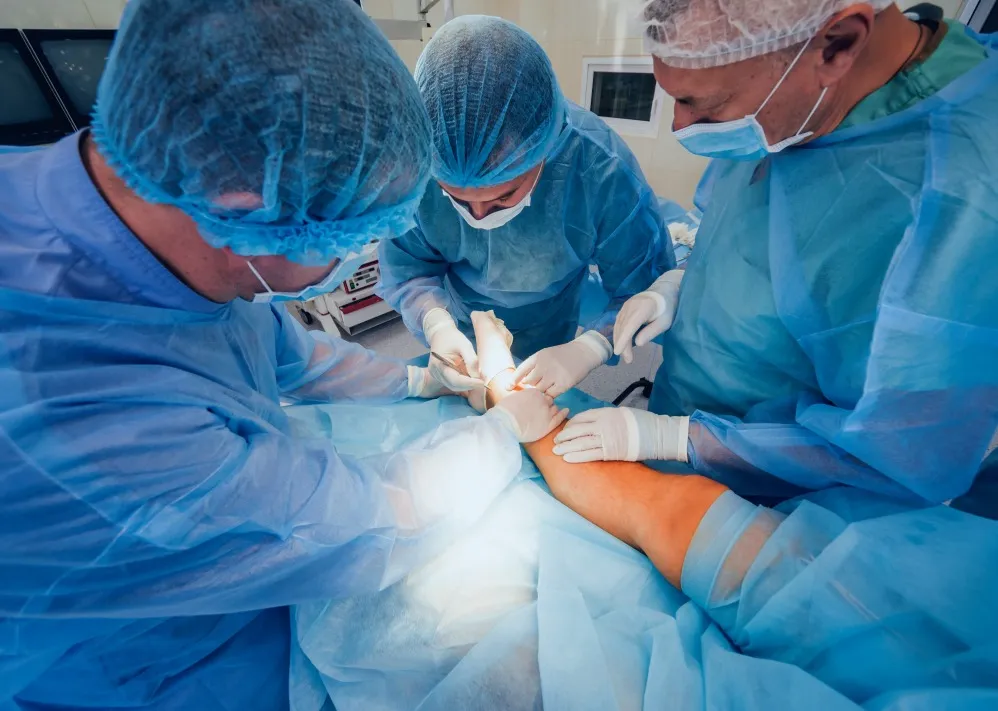
Not every fracture can be managed with a cast or brace. High-energy accidents, severe falls, industrial injuries, and complicated fractures can produce unstable bone patterns that require advanced trauma surgery to restore alignment and provide adequate stability.
For patients in Pune, understanding why trauma surgery is recommended can make discussions about treatment easier, especially when an injury involves multiple fragments, a joint surface, or significant displacement.
When Does a Traumatic Injury Become Complex?
A fracture may be considered complex when simply immobilising the limb is unlikely to maintain satisfactory alignment or function.
Examples can include:
- Multiple-fragment fractures
- Open fractures
- Pelvic or acetabular fractures
- Fractures extending into joints
- Multiple fractures in one limb
- Fractures associated with dislocation
- Injuries involving substantial soft-tissue damage
- Certain fractures around previous implants
The treatment decision depends on the entire clinical picture rather than the appearance of an X-ray alone.
Why Is Alignment So Important?
Bones provide both structural support and mechanical movement. When a fracture heals in an unsuitable position, the change in alignment may affect how forces travel through the limb.
This is particularly important near joints.
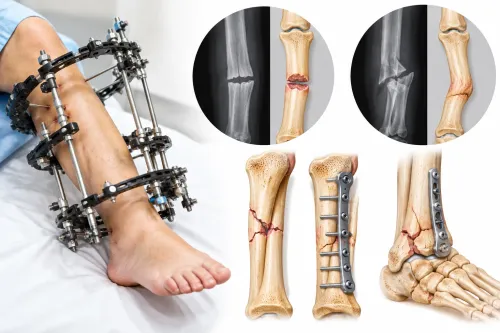
For example, an irregular joint surface after a fracture can alter movement and loading. In appropriate cases, surgery attempts to restore anatomical relationships as accurately as reasonably possible while providing enough stability for healing.
How Is a Fracture Stabilised Surgically?
Different fixation techniques are available. The surgeon selects an approach according to the bone involved, fracture configuration, patient's condition, and surrounding tissues.
Common methods include:
Plates and Screws
A plate can bridge or support a fractured region while screws secure the construct to the bone.
Intramedullary Nails
A metal rod may be inserted through the internal canal of certain long bones. This technique is commonly considered for selected femur or tibia fractures.
External Fixation
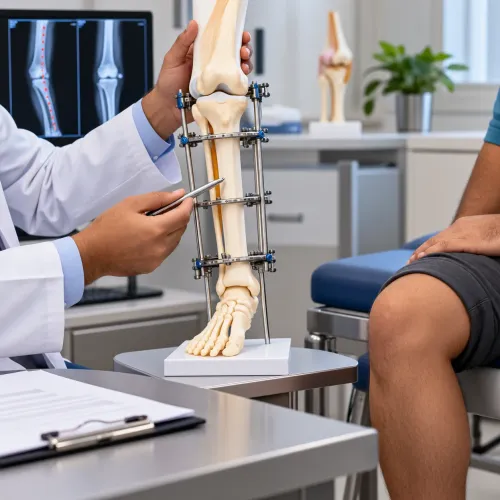
Pins connected to an external frame can provide temporary or definitive stability in particular trauma situations, including some severe open injuries.
No implant is universally best. Appropriate fixation depends on the individual injury.
What Happens Before Surgery?
Trauma surgery generally requires careful planning.
Assessment may include:
- Physical examination
- X-rays
- CT imaging where required
- Blood investigations
- Evaluation of wounds and soft tissues
- Anaesthesia assessment
- Review of other medical conditions
In some injuries, surgery is performed urgently. In others, swelling or soft-tissue conditions may need to improve before definitive fixation is undertaken.
Surgery Is Only One Part of Recovery
Successful trauma management involves both fixation and rehabilitation.
After surgery, the treating team determines when the patient can begin:
- Joint movement
- Muscle activation exercises
- Partial weight bearing
- Full weight bearing
- Strengthening
- Balance exercises
- Functional activities
Following instructions about weight bearing is important. Loading a healing fracture too early can place excessive stress on the repair, while unnecessary prolonged inactivity can contribute to stiffness and muscle loss.
Questions Patients Can Ask Before a Procedure
Patients and families may find it useful to ask:
- What type of fracture has occurred?
- Why is surgery being recommended?
- What fixation method is planned?
- When can movement begin?
- How long might weight bearing be restricted?
- What follow-up imaging will be required?
- What complications should be watched for?
Clear communication makes the recovery process easier to understand.
For people in Pune dealing with complicated fractures after an accident, access to specialised orthopaedic trauma evaluation helps determine whether conservative care or surgical fixation is appropriate. Anand Orthopaedic Hospital evaluates bone and joint trauma and plans treatment according to fracture characteristics, soft-tissue condition, and individual patient needs.
Complex trauma recovery can take time, particularly after high-energy injuries. The aim of treatment is not simply radiographic bone healing but restoration of alignment, mobility, strength, and practical function as safely as possible.
Keywords